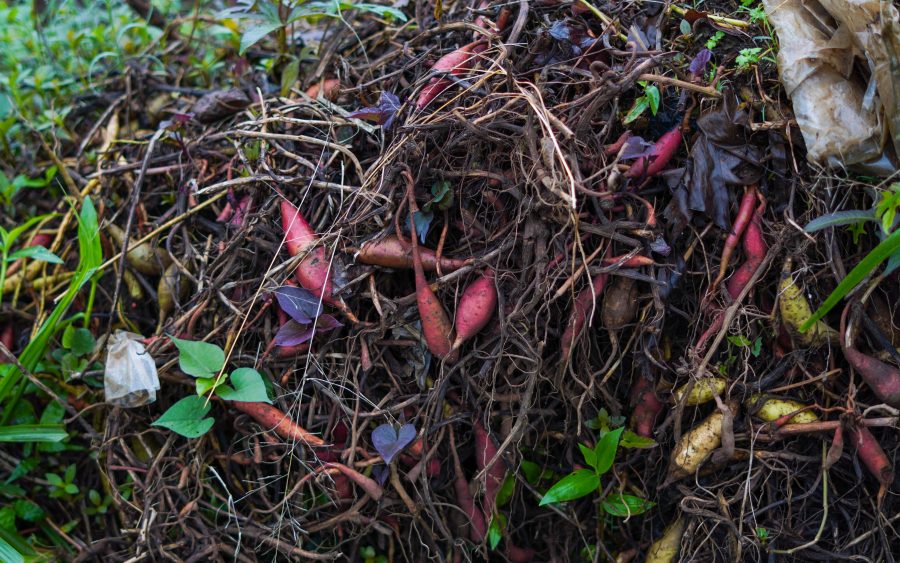
Green waste on a farming island is most of the waste, and for years all of it went into a pit at the east end and was burned when the pit was full. The smoke crossed the plots and, on a southerly wind, the school.
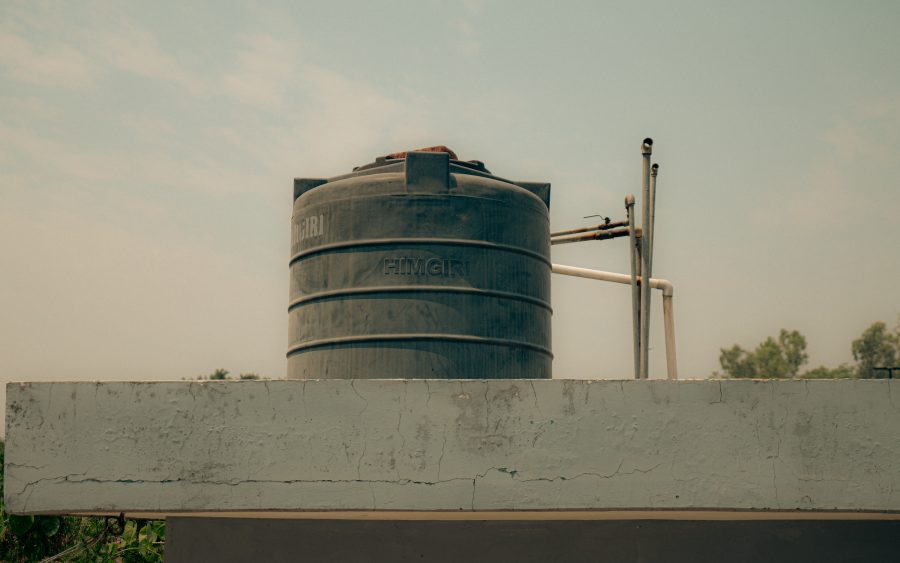
The yard has eleven turning bays on a hard floor, a water point, a shade roof over three of the bays, and a fence to keep the goats out, which was not in the original plan and is the reason the yard works.
Household green waste goes on the Sunday and Wednesday round in its own bag. Plot trimmings are brought by the growers or collected by the tractor. The material is turned by hand every ten days by two staff, which is an hour each time and the whole labour cost of the project.
The compost goes back free, by the trailer load, in the two months before planting, and last year it went to thirty one of the forty plots being worked. Two growers who had bought fertiliser for years have stopped.
The result the council did not plan for: complaints about smoke stopped entirely in the first year. There had been eleven the year before, mostly from the houses nearest the school.
What has not worked: two of the eleven bays are always full of material nobody has turned, because two staff and an hour every ten days is the limit of what four people can do. The council has asked for a small turner in the next budget.