Three ways to send the same load, and the crossover points are more specific than most people assume.
We get asked which is cheaper roughly every day, and the honest answer is that it depends on three numbers: the volume, the island and the unloading. Here is how we work it out.
Under about twenty five cubic metres, loose cargo nearly always wins. You pay for the space you use and you share the boat with everybody else. The cost per cubic metre is higher than a container's, but you are not paying for empty space, and there is no handling charge for packing a box you already packed.
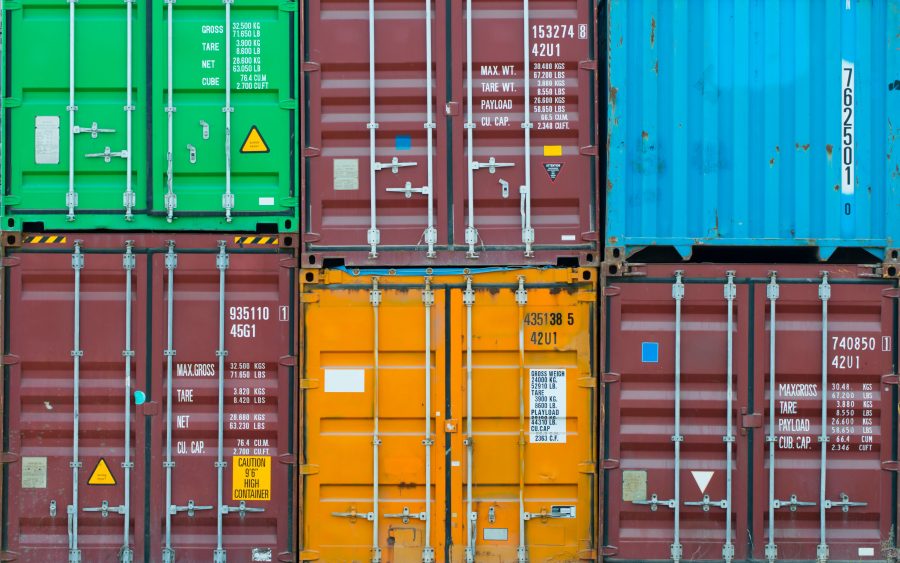
Between about twenty five and forty cubic metres it gets interesting. A twenty foot container holds roughly thirty three cubic metres of ordinary cargo, less if your goods do not stack. At a full container's rate divided across that volume, the rate per cubic metre drops well below the loose rate. The catch is that you have to fill it. A container sailing with twenty cubic metres in it costs the same as one sailing full, so a customer who books a container for a load that does not fill it usually pays more than they would have as loose cargo.
The second consideration is the island rather than the volume. A number of islands have no crane and no ramp. There, a container has to be broken down at the quay or landed onto a barge, which costs time and a handling fee, and on a bad quay it can cost a tide. On those islands loose cargo wins at volumes where a container would otherwise be cheaper, and we will tell you which case yours is at booking. Anybody who quotes you a container rate for an island without asking about the quay has not thought about your job.
The third is handling risk. A sealed container is handled twice: once loading, once unloading. Forty boxes of loose cargo are handled six or eight times between your supplier and your store room. If your goods are fragile, valuable or embarrassing to lose, the container is worth paying for even where the arithmetic is level.
Above about forty cubic metres, or with cargo that cannot share space, ask about a charter. People assume a whole boat is extravagant and it frequently is not, especially for a one off job on an island we do not serve weekly. A charter is priced on the round trip and the time at the island, so the way to make it cheap is to have the unloading properly arranged before the boat arrives.
One last rule that saves more money than any of this. Do not split a load across two sailings to catch a slightly better rate. The second half arriving a week later has a cost, and on a building site or in a shop it is usually larger than the freight you saved.