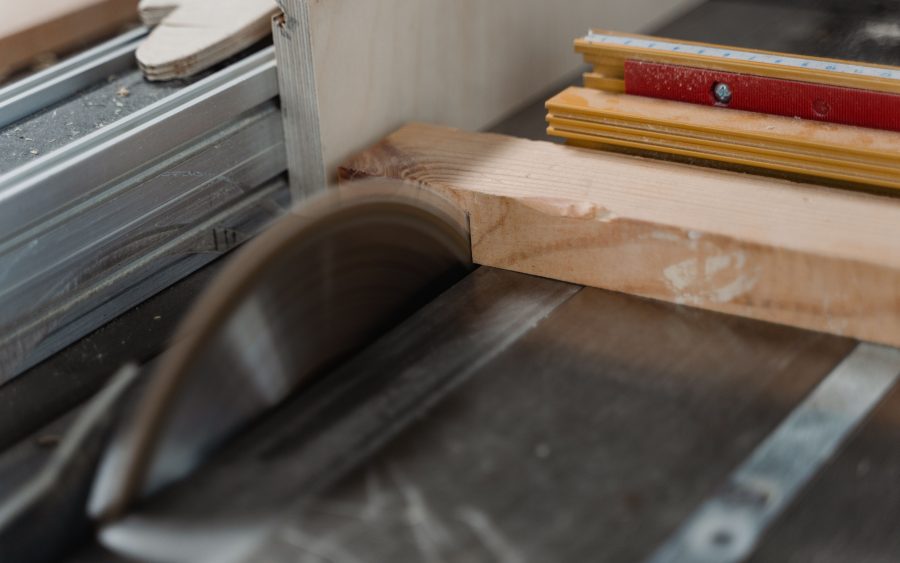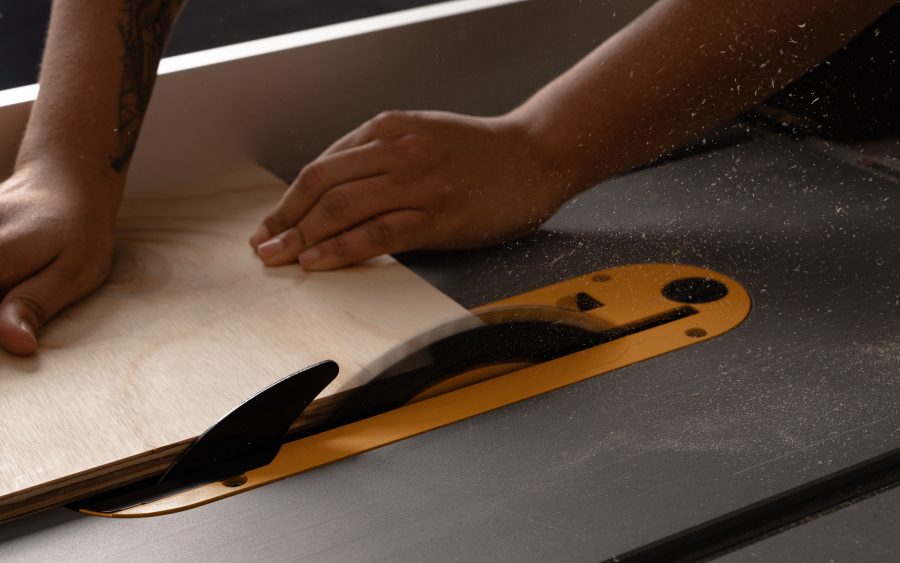
Carpenters are often surprised that paying us to cut their board is cheaper than cutting it themselves. Here is the arithmetic.
About half the trade customers who come here for the first time are buying sheets and cutting them in their own workshop, and about half of those switch to sending us a list within a few months. It is not because our saw is better than their saw, although it is. It is arithmetic.
Start with waste. Nesting parts onto an eight foot by four foot sheet is a puzzle, and everybody does it in their head, and almost everybody is a sheet or two out on a job of any size. When we take a cutting list, we lay it out properly first and tell you how many sheets it needs. On a wardrobe job that regularly comes back as five sheets rather than the six somebody ordered, which is 620 rufiyaa saved against roughly 400 in cutting charges, before anybody has picked up a tool.
Then labour. A carpenter cutting forty parts from six sheets on trestles with a circular saw and a straight edge is looking at the better part of a day, and it is a two person day because a full sheet cannot be handled alone. On a sliding panel saw the same forty parts take about forty minutes and come back square to the millimetre. Square matters more than it sounds: a carcass built from parts that are a millimetre out of square has to be pulled into shape with the fixings, and that is where doors that will not line up come from.
Then the stairs, which is the reason half our cutting work exists at all. A Malé lane and an old stairwell will not take an eight foot sheet. A bundle of cut parts goes up on somebody's shoulder. Carpenters working in the old part of town often have no other option, and it is worth knowing before you order sheets for a third floor flat.
Then dust and space. A workshop cutting sheet material is a workshop full of dust for the rest of the day, and a small workshop cutting board cannot do anything else while it happens.
There are two cases where cutting your own is right. Where the job is changing as it goes, which is most site fitting work, and where the parts are odd shapes rather than rectangles. Send us the rectangles and keep the awkward pieces for yourself, which is what most of our customers now do.
One practical note. Mark the grain direction on your list where it matters, and give us your own room or job numbers for the labels rather than leaving us to number the bundles. We learned the second one from a school job where our numbering meant nothing to the man unpacking it.