Refacing a sound kitchen costs about a third of a new one and takes four days. Here is how to tell, with a torch, in ten minutes.
People ring us to replace a kitchen and about one in four of those kitchens should not be replaced. It is worth knowing how to tell, because the difference is roughly forty thousand rufiyaa and five weeks of not having a kitchen.
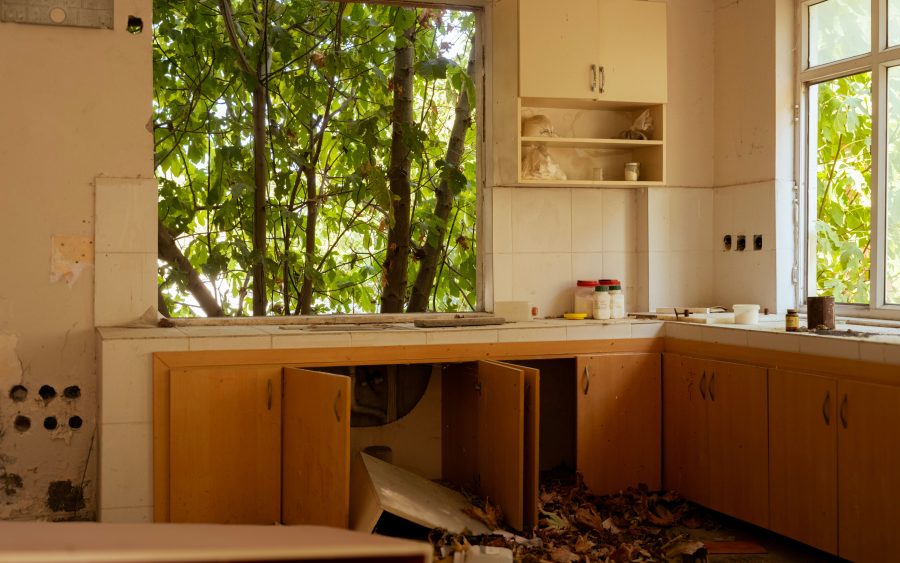
What fails first on a kitchen is everything you can see. Laminate lifting at a door edge, hinges rusted, drawer runners collapsed, a worktop scorched or a joint that has swollen. All of that is replaceable in four days with the carcasses staying where they are. What decides whether that is worth doing is the part you cannot see.
Take a torch and empty one base unit. Four things to look at.
The thickness of the sides. Measure the edge of the carcass panel. Eighteen millimetre is worth keeping. Twelve millimetre has probably had all the hinge screws it can take, and a new heavier door will pull them out.
The bottom of the sink unit. Press it with your thumb at the back corner. If it is soft, spongy or swollen, water has been sitting there, and if the unit is MDF the base has to be remade rather than dried out. That in itself is not fatal: we cut out and replace sink bases in marine ply regularly. If three or four units are soft, the kitchen is telling you something.
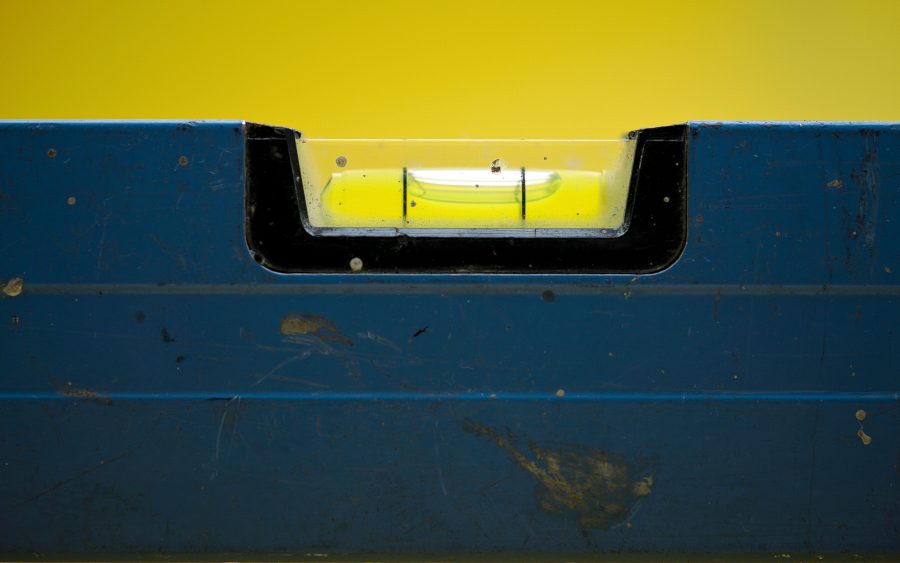
Whether the carcasses are square. Open two adjacent doors and look at the gap between them from top to bottom. If it tapers noticeably, the carcasses have gone out of square, which usually means the backs were pinned rather than housed. New doors on out of square carcasses look worse than the old ones did, because a new door has crisp edges that show the taper.
And the fixing to the wall. Push firmly on a wall unit. If it moves, that is a fixing problem rather than a carcass problem and it is cheap to fix, but find out now.
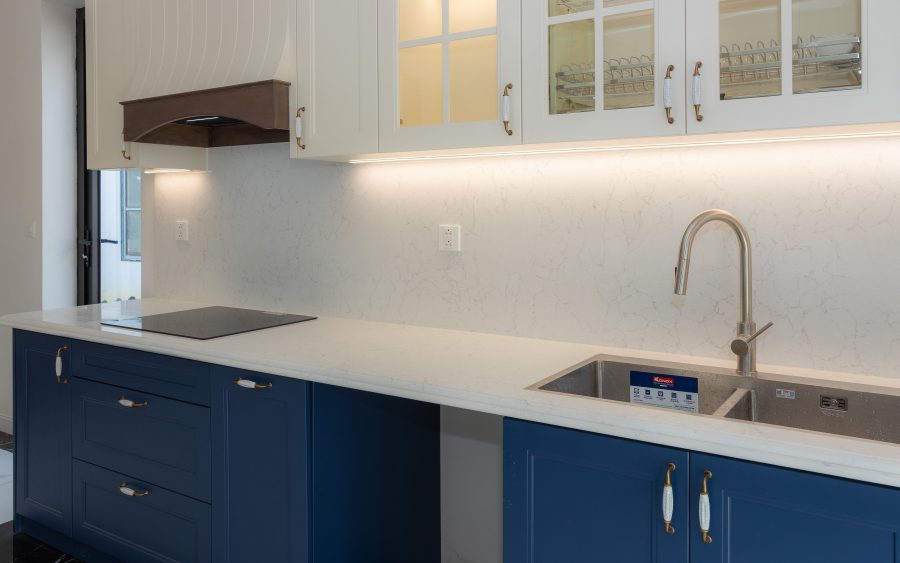
If the carcasses are eighteen millimetre, dry and square, refacing is honestly the better purchase: new doors and drawer fronts, new soft close hardware, a new worktop and any damaged base remade. About a third of the price and four days instead of six weeks.
If they are twelve millimetre, or three bases are soft, or the doors taper, replace it, and do not let anybody sell you a reface. When we look at a kitchen we write down which of the two it is and roughly how many years the carcasses have left, because a landlord or an owner should be told which thing they are buying.