If you watch one session and see forty children, one ball and a queue, you have seen the whole problem with youth football here.
Go and watch any children's football session and count two things: how many minutes your child has the ball at their feet, and how many minutes they spend standing still.
In a session of forty children with one coach, an eight year old touches the ball for about four minutes in an hour. The other fifty six are queueing for a turn, listening to instructions aimed at everybody, or standing at the side while a match is played. That child has been at football. They have not played football.
Here is what an eight year old should be doing instead, and none of it is complicated.
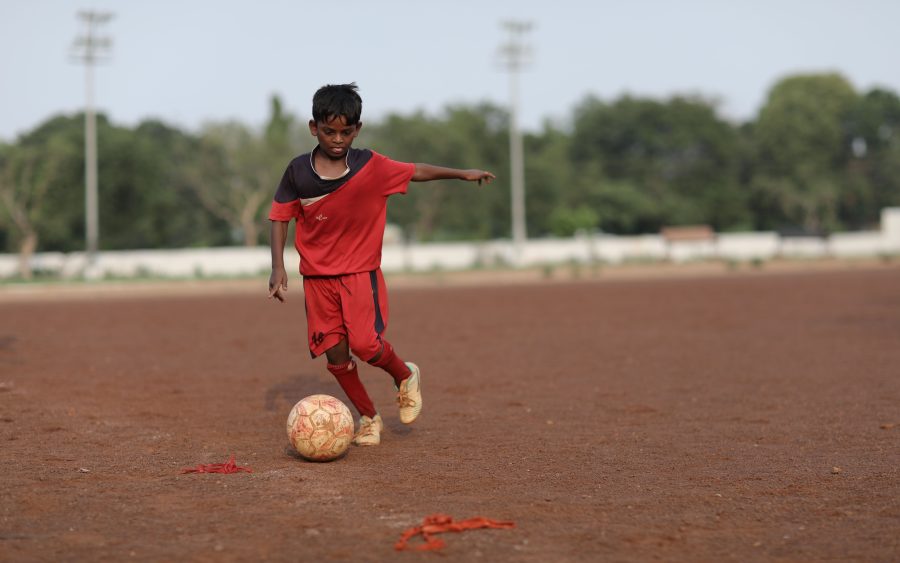
A ball each, for the first twenty minutes. Not a drill, not a line, a ball each and things to do with it. Turning, stopping, changing direction, using both feet, doing it while somebody gently tries to take it away. This is the age when a child's body learns movement fastest and it never comes back as cheaply.
Small games, for most of the rest. Three against three, four against four, small goals, short games, change the teams often. In a three against three, every child gets the ball every few seconds, makes a decision every few seconds, and defends and attacks in the same breath. In an eleven against eleven, a small eight year old on the wing can go four minutes without being involved at all.
No permanent goalkeeper. Somebody has to go in goal for a short game and it should be a different child every time. An eight year old who is put in goal because they are big spends fifty minutes watching and will not thank anybody for it at thirteen.
No positions. A child at this age who is told they are a defender will spend two years learning to stay near their own goal, which is a habit and not a skill.
And mistakes without consequence. This is the one that matters most and it is the hardest to sell to a parent watching from the side. A child who tries to dribble past somebody in their own half and loses it should be encouraged, because at eight they are learning whether they can, and that experiment gets more expensive every year they wait. A child who is shouted at for losing it learns to pass backwards, and passing backwards is a habit that survives long after the shouting stops.
What this all requires is a small group, which is why it is not what you usually see. Twelve children to a coach is more expensive to run than forty to one. That is the whole argument, and it is why we have a waiting list rather than bigger groups.