Two grades of pad, a difference of about a hundred and eighty rufiyaa, and a disc that costs seven hundred. The arithmetic is not close.
We stock two grades of brake pad for most of the common machines and the price difference is usually somewhere between a hundred and two hundred rufiyaa. Perhaps half our customers take the cheaper one and for a good proportion of them that is the right decision. For the rest it is the most expensive saving they will make this year.
Here is the actual difference. The cheaper pad uses a harder friction material. It stops the machine perfectly well, it is noisier when it is cold, it fades sooner when it is worked hard, and it is harder on the disc. The better pad is softer, quieter, more consistent when hot, and it wears itself out rather than wearing the disc.
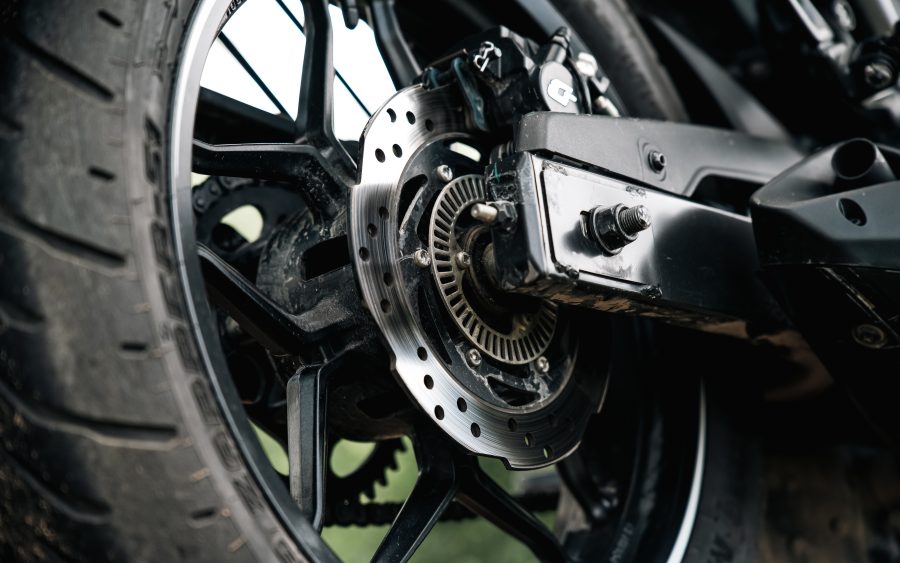
Now the arithmetic. A disc for a common automatic is around seven hundred rufiyaa fitted. A pad set is two hundred and forty at the low end. If the hard pad shortens the disc's life by even one replacement over the life of the machine, it has cost you three sets of pads to save one.
What decides which of those two futures you get is not the pad on its own, it is how the machine is used. Four kilometres a day on flat roads, one rider, gentle traffic: the cheap pad is fine and you will replace it a little more often. Two people and a load, all day, in stop and start traffic, or up and over the bridge twice a day: buy the better pad. Ferry ramps and salt spray push it the same way, because a pad that has to work hard on a wet disc is a pad that gets hot.
The part of this that people skip is the disc itself. A pad is only half the system and fitting new pads to a disc that is scored, blued or below its minimum thickness gives you a new pad that lasts two months and a braking distance that is worse than what you had. The minimum thickness is stamped on the disc. Ask us to measure it, at the counter, for nothing, before you buy anything. We would rather sell you a disc today than a second set of pads in eight weeks and lose you after that.